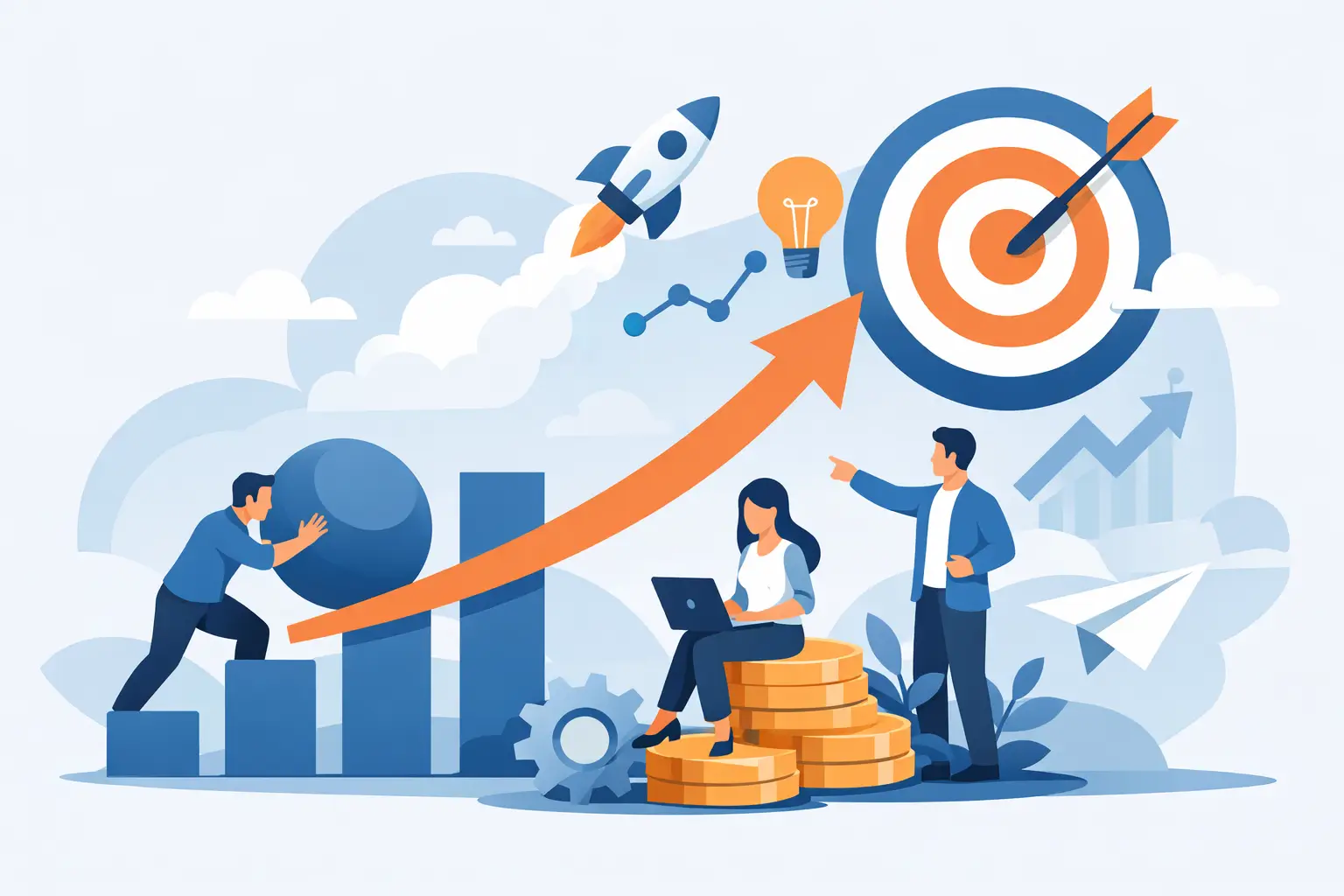
A founder can spend months building a useful product and still lose the market in the first 10 seconds of a customer visit. The message feels vague, the website creates doubt, the product journey has friction, and paid traffic exposes every weak link at once. A startup growth agency exists to stop that fragmentation by turning brand, product, and acquisition into one commercial system.
For ambitious startups, growth is not a marketing campaign layered onto a finished business. It is the discipline of making every customer-facing decision pull in the same direction: credibility, conversion, retention, and revenue. That includes the story investors hear, the interface users touch, the landing page that receives cold traffic, and the ecommerce experience that turns intent into an order.
A startup growth agency is not simply a design studio, a development shop, or an ad-buying vendor. Those specialists can be valuable, but each sees only part of the equation. A growth partner works across the connected decisions that determine whether a startup can earn attention and convert it into measurable business progress.
The work usually begins with clarity. Who is the highest-value customer? What urgent problem are they trying to solve? Why should they believe this company over an established alternative or the option of doing nothing? If the answers are not sharp, a beautiful visual identity or a polished website will only make an unclear offer look more expensive.
From there, the agency connects strategy to execution. Brand positioning shapes the identity. The identity influences the website, app, packaging, advertising creative, and company profile. Product and ecommerce development determine whether users can complete the action the marketing promised. Campaign data then reveals where the message, experience, or funnel needs to improve.
This integrated model matters because customers do not experience a startup in departments. They experience one brand. A sharp ad followed by a slow website weakens trust. A strong pitch deck followed by a generic product interface raises doubts. A high-converting store with inconsistent packaging can make repeat customers question the quality they thought they bought.
Too many startups call for growth support only after ads fail or sales plateau. By then, the agency is asked to compensate for a foundation that was never built to convert. Growth moves faster when the fundamentals are designed deliberately from the beginning.
Positioning is more than a slogan. It is the strategic decision about where the company competes, who it serves best, and what it can credibly own in the market. A fintech product, for example, may need to communicate security and control before speed. A premium ecommerce brand may need to establish taste and product quality before it can ask for a higher price.
That decision affects copy, visual direction, feature priorities, audience targeting, and sales conversations. Without it, teams often produce campaigns that generate attention but attract the wrong people. Traffic becomes a vanity metric, and lead volume masks weak buying intent.
Early-stage businesses ask customers to take a chance. Strong branding helps make that decision feel safer. It signals that the company understands its category, has standards, and is prepared to deliver.
Credibility is built through consistent details: a clear logo system, purposeful typography, quality imagery, direct messaging, and interfaces that feel considered rather than assembled. For a startup preparing to raise capital, the same consistency also tells investors that the team can execute. The brand does not replace traction, but it can make traction easier to earn and explain.
A website or app is often the real sales team. It needs to load quickly, explain value without forcing visitors to work for it, and guide users to a clear next step. For ecommerce, that means product pages, filters, checkout, payment options, and post-purchase communication must work as one revenue engine.
The right build depends on the business. A fast validation-stage startup may need a focused landing page and lightweight prototype before investing in a full custom platform. A scaling operation with complex workflows may need custom web or mobile development, deeper integrations, and an architecture built for expansion. Spending too little can create technical debt. Spending too much before market validation can slow learning. The smart choice is the one that matches the next business milestone.
Once the foundation is in place, growth becomes a sequence of deliberate experiments rather than random activity. The goal is not to be visible everywhere. The goal is to create the shortest credible path from first impression to valuable action.
A strong agency starts by defining the conversion event that matters now. It may be qualified demo requests, waitlist signups, completed purchases, booked consultations, app activations, or repeat orders. That focus prevents teams from celebrating clicks while the business remains stuck.
Then comes the acquisition engine. Content, search visibility, paid media, partnerships, email, and founder-led outreach can all play a role, but channel selection should follow customer behavior and unit economics. B2B founders selling high-value services may win with targeted outreach and high-conviction landing pages. A consumer ecommerce brand may need performance creative, product storytelling, creator assets, and a disciplined retargeting flow.
Creative is especially important when paid traffic is involved. Cold audiences do not owe a startup their attention. Ads must communicate a distinct benefit immediately, earn the next second of consideration, and lead to a page that continues the same story. AI-led video and advertising production can increase the speed of creative testing, but more assets alone do not solve weak strategy. The message still has to earn belief.
After traffic arrives, the work shifts to conversion. Are visitors seeing the right offer? Is the call to action specific? Does the page answer objections before they become exit points? Are forms too long? Does checkout create unnecessary hesitation? Small improvements at these moments can materially change the economics of every campaign.
Retention is the final force multiplier. Acquiring a customer once is expensive. Building an experience that earns the second purchase, renewal, referral, or upgrade changes the ceiling of the business. This is where product usability, customer communication, packaging, onboarding, and service quality become growth levers rather than operational afterthoughts.
The best agency relationship is not based on a long service menu. It is based on shared accountability for the next stage of the company. Founders should expect a partner to ask hard questions about the business model, target customer, economics, sales cycle, and capacity to fulfill demand.
They should also expect a clear operating rhythm. Planning establishes the growth priorities and brand direction. Design and development turn strategy into usable customer experiences. Testing and launch reveal what works under real market conditions. Ongoing support uses evidence to refine the system rather than treating launch day as the finish line.
Be cautious with partners who promise scale before they understand the offer. No agency can manufacture product-market fit through visual polish or media spend. Likewise, a team that only delivers assets without explaining how those assets support customer acquisition leaves founders managing disconnected vendors and disconnected outcomes.
A capable partner should be comfortable saying, “not yet.” It may be too early for a major app build, broad international campaigns, or a full rebrand. That restraint protects capital and keeps the company focused on the moves most likely to create momentum now.
The right startup growth agency helps a business look beyond the immediate deliverable. A logo should prepare the company for a larger category. A website should support future campaigns and sales conversations. An ecommerce store should make repeatable revenue easier, not merely launch a catalog. A product interface should remove friction today while leaving room for tomorrow’s features.
At Afkar Alkhaleej, this is the operating mindset: build the brand, technology, and acquisition system together so each investment strengthens the next one. The objective is not more activity. It is a startup that can move faster, present with confidence, convert cold traffic, and compete like a business built to win.
Founders do not need every growth channel at once. They need a clear market position, a credible digital experience, and a disciplined plan for turning attention into action. Build those pieces as one system, then give the market a reason to choose you again.