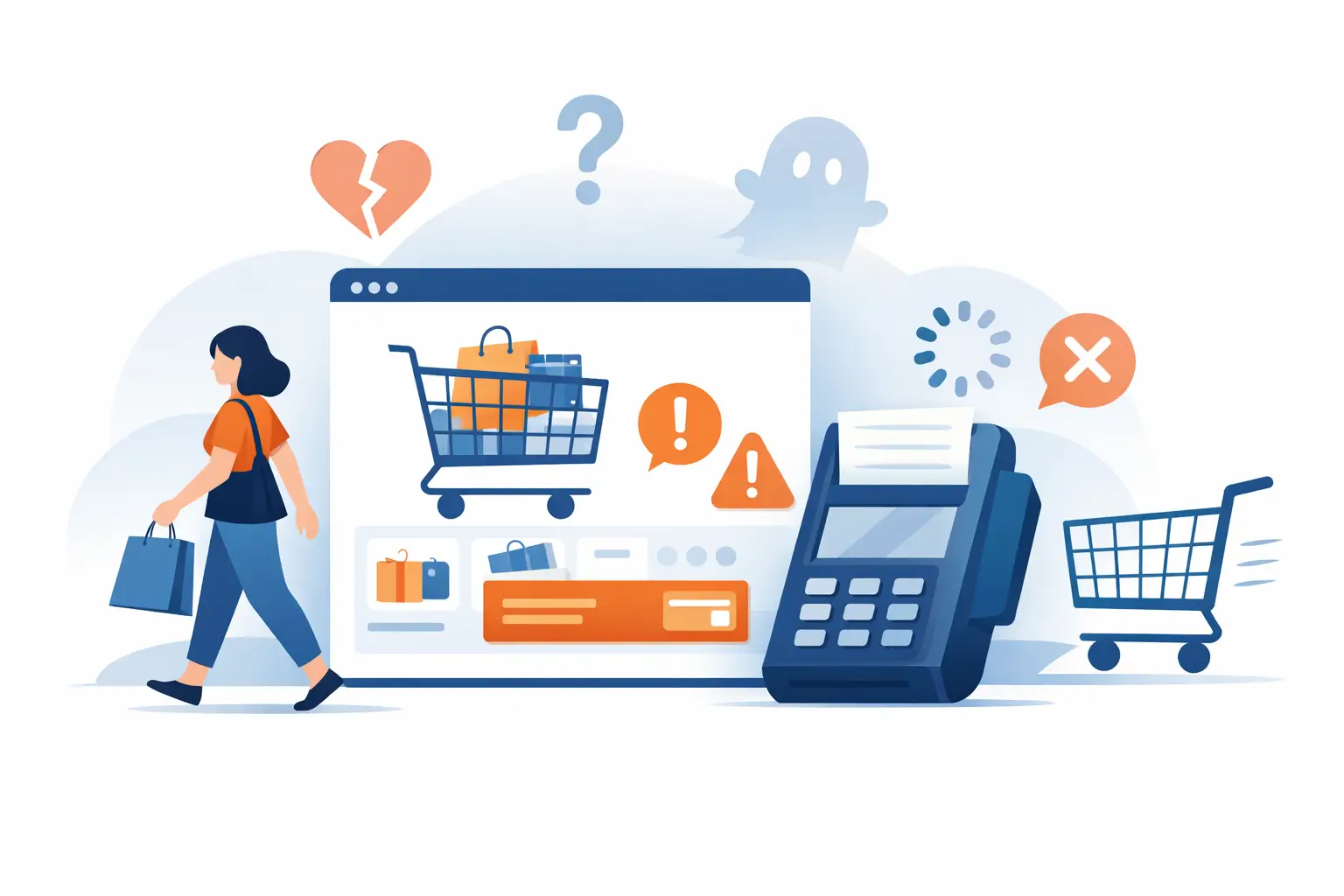
A shopper has already done the hard part: found your product, compared options, selected a variant, and clicked Add to Cart. When that intent disappears before payment, the cost is not just one missed order. It is wasted ad spend, a weaker return on acquisition, and a leak in the growth system you are trying to scale. The question of why shopping carts abandon is really a question of where confidence breaks down.
For founders and ecommerce operators, cart abandonment should not be treated as a normal, unavoidable percentage. Some abandonment is expected, especially on mobile and during product research. But a high or rising rate is often evidence of friction that can be designed, developed, and tested out of the journey.
Shoppers rarely leave for one reason alone. They leave because the checkout experience creates doubt at the exact moment your brand needs to make buying feel easy, safe, and worthwhile.
Unexpected shipping, taxes, service fees, or currency conversion charges remain among the fastest ways to lose a ready buyer. A product page may have won on price, but a checkout total that suddenly climbs can make the customer feel misled.
This is especially damaging for brands selling across the United States, Kuwait, the Gulf region, or other international markets. Delivery expectations, duties, and payment preferences vary. If the shopper cannot understand the total cost early, they may abandon rather than take a financial risk.
The answer is not always free shipping. That can damage margins if used without discipline. The better approach is clarity: show estimated delivery costs before checkout where possible, set clear free-shipping thresholds, and communicate duties or taxes before the payment step. A customer may accept a higher total. They are far less likely to accept a surprise.
Every unnecessary field gives the shopper another reason to postpone the purchase. Account creation, long address forms, repeated data entry, unclear error messages, and multi-page checkout flows all create drag.
Mobile shoppers feel this friction first. Typing a full address on a small screen, switching between apps for an authentication code, or trying to correct a form that will not explain what went wrong can end a transaction in seconds. If a checkout is not built for thumbs, it is not built for conversion.
Guest checkout should be prominent. Address autocomplete, logical field order, saved payment options, and visible progress indicators can reduce effort without sacrificing the data needed to fulfill an order. For higher-ticket products, a slightly more detailed process may be justified for fraud prevention or delivery accuracy. Even then, every field should earn its place.
Cold traffic does not give new ecommerce brands much patience. A shopper who has never heard of you is making a rapid risk assessment: Is this business legitimate? Will the product match the photos? Can I return it? Is my card information safe?
Trust signals must show up before uncertainty becomes an exit. Clear return terms, accessible customer support, secure payment options, credible reviews, real product imagery, and consistent branding all help. So does a checkout page that looks like it belongs to the same company as the product page.
A common conversion problem is visual inconsistency. A polished social ad sends users to a strong landing page, then the cart or checkout feels generic, outdated, or poorly localized. That disconnect makes customers question whether the experience is secure. Brand strategy and ecommerce development are not separate projects when revenue is on the line.
A customer can want the product and still leave because they cannot pay the way they prefer. Card payments alone may be enough for some audiences, but not every market, category, or order value.
Digital wallets reduce typing and accelerate mobile checkout. Buy now, pay later options can increase access for larger baskets, though they come with provider fees and must fit your margin model. Local payment methods may matter significantly when you sell internationally. The right mix depends on where your buyers are, what they purchase, and how much confidence your brand has established.
Payment failure also needs attention. Declined transactions, slow gateway responses, and vague error messages are not simply technical issues. They are lost revenue events. Track them by device, payment method, country, and browser so your team can identify patterns instead of guessing.
Not every abandoned cart is a rejection. Some customers are interrupted, comparison shopping, waiting for payday, or saving an item for later. Your goal is not to force every visitor through the funnel. Your goal is to remove the friction that stops willing buyers.
Look for these signals in your analytics and session recordings:
These patterns matter because they tell you where to investigate. They do not automatically tell you why. Pair quantitative data with customer support conversations, post-purchase surveys, and usability testing. Ask customers what nearly stopped them from buying. Their language often exposes problems dashboards cannot.
Start by mapping your own purchase journey from a first-time visitor’s perspective. Use a phone, a slower connection, and a different browser. Add an item, test a promo code, change quantities, enter an address, and complete a payment attempt. You will quickly see whether your checkout operates like a growth engine or a barrier course.
Then prioritize improvements based on revenue impact and development effort. Pricing transparency, guest checkout, stronger delivery messaging, and mobile payment wallets are often high-impact moves. A full checkout rebuild may be needed if the current platform is inflexible, but it should follow evidence rather than frustration.
Speed deserves special attention. Heavy scripts, uncompressed assets, third-party widgets, and poorly configured apps can slow the cart and checkout. A visually ambitious ecommerce store still needs performance discipline. Every extra second gives a distracted customer time to leave, return to search, or open a competitor’s tab.
Recovery campaigns also have a role, but they are not a substitute for fixing the source of abandonment. A well-timed email or SMS reminder can recover shoppers who were genuinely interrupted. Offering a discount to every abandoner, however, can train customers to wait for one and erode margin. Use incentives selectively, based on cart value, customer history, and the reason they likely left.
Conversion optimization fails when teams change the offer, design, shipping rule, and checkout flow all at once. If conversion improves, nobody knows what caused it. If it declines, the same uncertainty remains.
Set a clear hypothesis. For example: displaying delivery estimates on the product page will reduce exits from the shipping step. Measure the right metric, run the test long enough to account for traffic variation, and examine whether the result holds across mobile and desktop. A change that helps desktop users while hurting mobile can still be a poor decision for a mobile-first store.
The strongest ecommerce brands do not treat cart abandonment as a single checkout issue owned by one app or one marketer. It sits at the intersection of acquisition, product merchandising, UX, development, operations, and brand credibility.
If your ads promise premium quality but your product page lacks proof, shoppers hesitate. If your store promises fast delivery but shipping dates appear late in checkout, shoppers leave. If your brand looks investor-ready on social media but the mobile cart feels clumsy, you lose the trust you paid to earn.
That is why Afkar Alkhaleej approaches ecommerce as a connected growth system: strategy, conversion-focused design, responsive development, testing, and ongoing optimization working toward the same commercial outcome.
Your cart is not the end of the customer journey. It is the moment your entire business makes its promise measurable. Build it with the same urgency you bring to acquisition, and more of the demand you create will turn into revenue.